Case study · /01
Doone
Re-engaging digital readers through AI recaps, reading streaks and social reading
- Role
- Product designer & researcher
- Timeline
- 4 months, 2024
- Team
- Solo, university project
- Focus
- UI design, UX research, AI integration
Page 112. She folds the corner, puts the book down, and never picks it up again.
Digital reading keeps growing (£280m in the UK in 2023), but engagement doesn’t keep up. Readers start books and drift: distractions, too much choice, no sense of progress, no one to read with. For a reading app, a half-read book is a lost reader.
Why readers drift
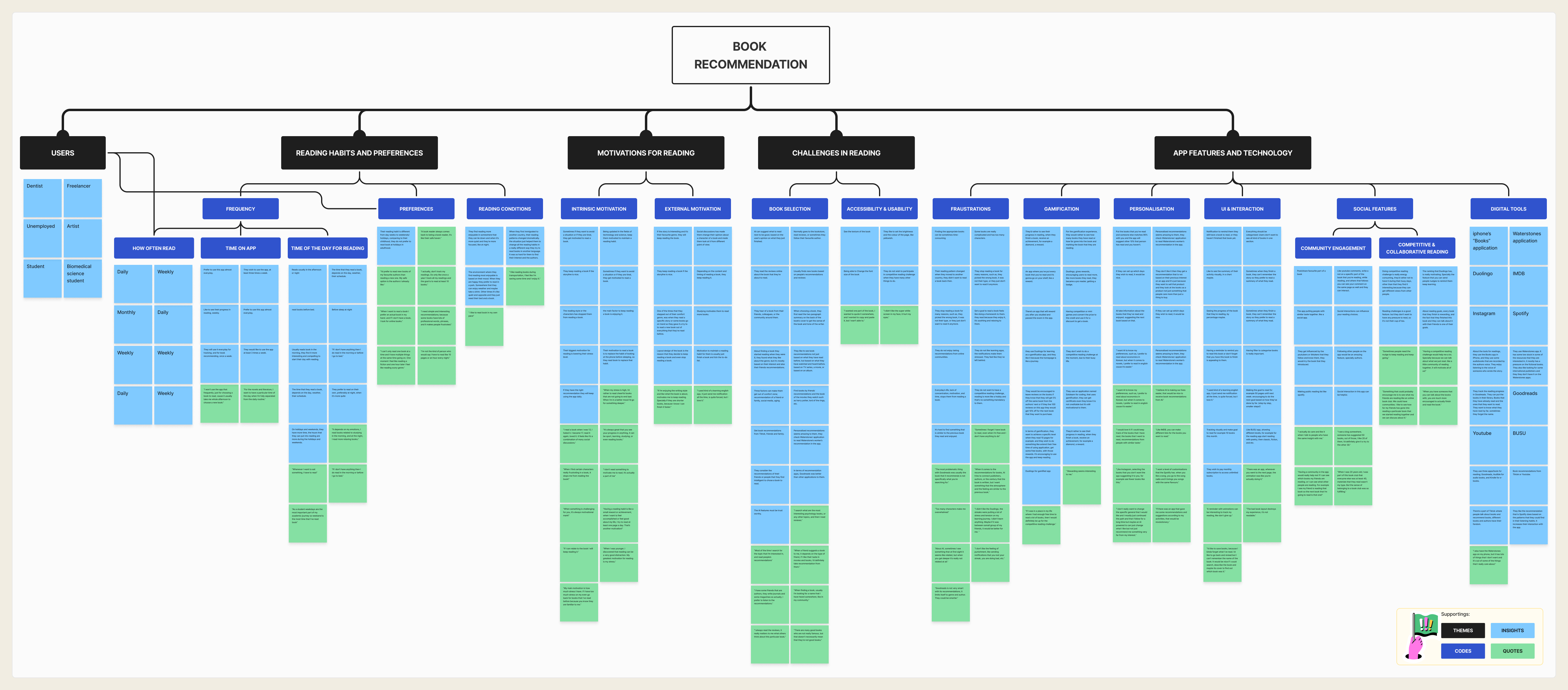
9 interviews · love and break-up letters to reading · affinity mapping
Select a pin or an insight to zoom in.
Dear Reading,
Perhaps one day we can find our way back to each other, but for now, I need to let go.
Dear Reading,
Whatever I do there are always more to it.
Dear Reading,
I love talking about you with my friends and family.
01 Coming back is hard
- “Sometimes I forget I have book to read, even when I’m free and I don’t have anything to do.”
- When they finish a book, they can’t remember the story, so they’d rather read a summary of what they read.
- “I’d like to save books, because I kinda forget what I’ve read.”
From the affinity map · interview quotes and codes
02 Progress is invisible
- “It’s always great that you see your progress in anything: sport, learning, studying, or even reading books.”
- “Having a reading habit is like a small reward or achievement.”
- “Rewarding seems interesting to me.”
From the affinity map · interview quotes and codes
03 Reading feels lonely
- “When you have someone that you can talk about the books with, you are much more encouraged to actually finish and read the book.”
- “Sometimes people need the nudge to keep reading and keep going.”
- “Having a community in the app would really help me!”
From the affinity map · interview quotes and codes
How might I design an experience that reignites the joy of reading, and sustains it?
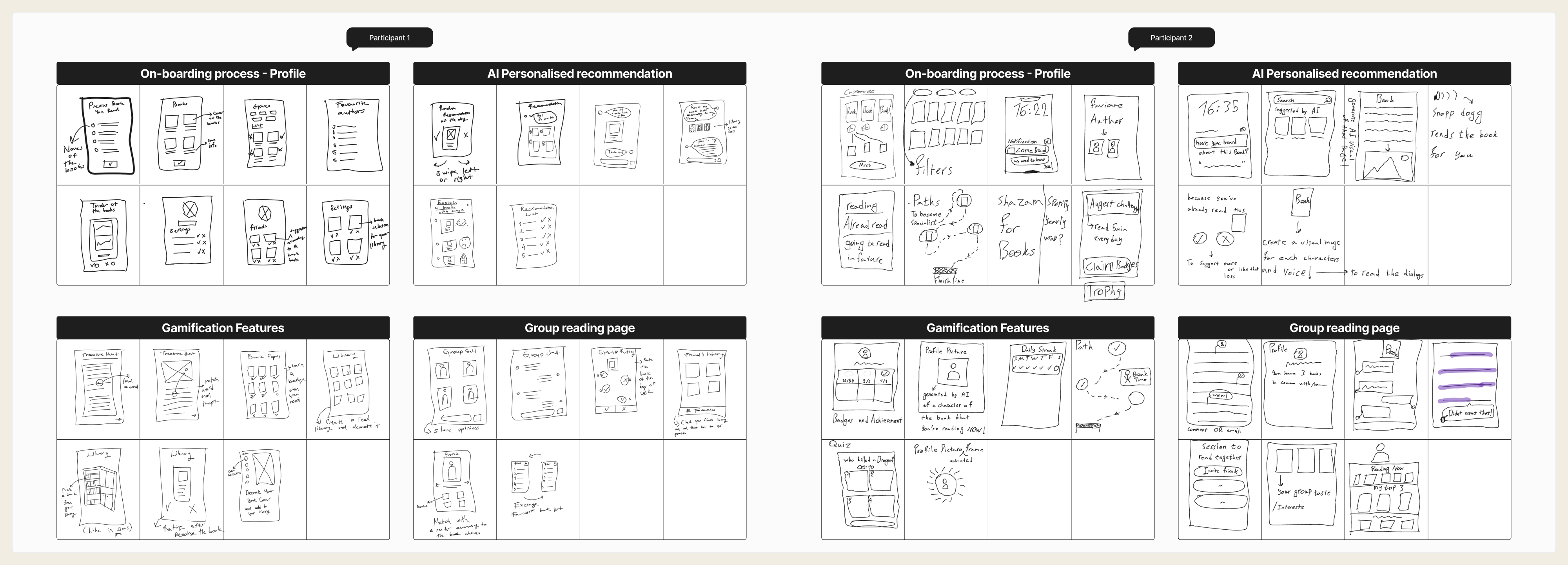
I didn’t want to guess what would bring readers back, so I designed with them. In Crazy 8s sessions, readers sketched ideas alongside me. Three kept coming back: a quick way into the story, a visible reward for progress, and company on the page.
Select a pin to zoom into a sketch.
01 Gamification → the reading tree
- Both readers sketched ways to make progress visible: badges, daily streaks, a reading path and treasure-hunt rewards.
- In Doone this became the reading tree: it grows with every chapter, keeps a streak alive, and earns points to rent the next book.
From the Crazy 8s sessions with readers
02 Group reading → Read together
- Both readers drew reading with others: sessions with friends, group pages, and comments right on the page.
- In Doone this became Read together: invite a friend to the same book and react to passages as you go.
From the Crazy 8s sessions with readers
03 AI recommendations → Book Wizard
- Readers imagined an AI that suggests what to read next: a pick of the day, “because you read…”, and books you might have missed.
- In Doone this became Book Wizard and mood picks.
From the Crazy 8s sessions with readers
What’s out there, and the gap
- Kindle, GoodreadsHuge libraries and reviews, but nothing helps you back into a book you leftThe recap
- Bookly, DuolingoStreaks keep people coming back, but reading progress stays a numberThe garden and seeds
- TikTok, InstagramBookTok shows readers want company, but it lives off the pageRead together
From my competitor analysis of six direct and four indirect apps.
One app, built around coming back
01 · First evening
Answers 01 · Coming back is hardPromise the way back on day one
The first thing Doone shows is the recap, the answer to ‘coming back is hard’. Book Wizard comes second. Sign-up is a sheet that grows out of the garden, and email expands the same sheet.





















































doone
12 DAYS AWAY
1 min
Lucy and Joshua are up for the same job. Last time, the lift got a little too cosy.
Stops at p.115, where you did.
Lost the plot?
We kept it.
Come back after a week or a month and get a one-minute catch-up of where you were. Nothing past your page.
Something cosy, set in a bookshop. Short, please.
94% match
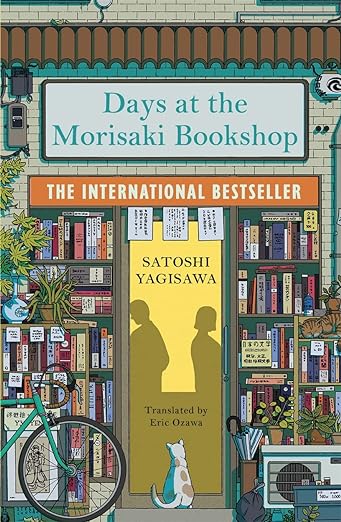
Days at the Morisaki Bookshop
A Tokyo bookshop, a slow summer, 160 pages.
Say how you
want to feel.
Cosy, creepy, quick or heartbreaking. Book Wizard reads 40,000 books so you don’t have to scroll.
Skip
Next
Nearly there.
Let’s plant your
first seed.
Save your garden, your notes and your place in every book.
Continue with Apple
Continue with Google
Use email instead
By continuing you agree to our Terms and Privacy Policy.
Back
Use your email
What should we call you?
We’ll only use this to sign you in
We’ll only use this to sign you in
Password

At least 8 characters. A sentence works well.
Create my garden
I already have an account
By continuing you agree to our Terms and Privacy Policy.
9:41

02 · A Thursday evening
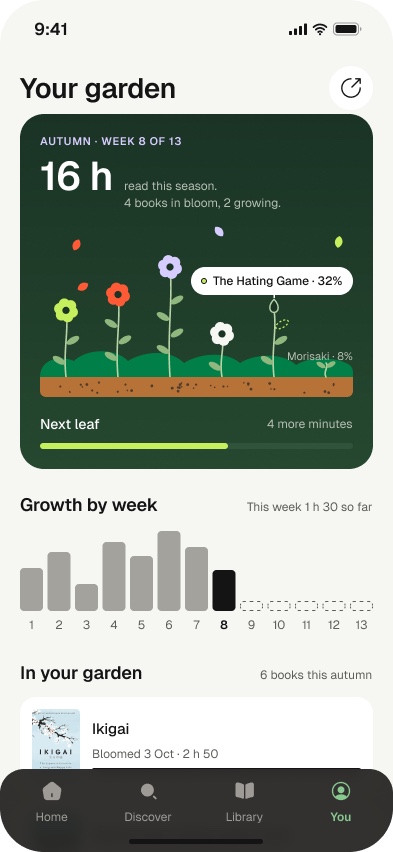
Answers 02 · Progress is invisibleA garden that grows as you read
Home shows your progress as a garden, with one quiet nudge to catch up. Seeds are the one currency: earn them by reading, spend them on rentals.
- Catch up in a minute
- Your garden
- Seeds, one currency
- Invite a friend
- Rent with seeds
- Finish a book
THURSDAY EVENING
Hello, Tanya

TA
YOUR GARDEN · AUTUMN, WEEK 8
16 h
read this season
4 books in bloom







4 min to your next leaf
60%
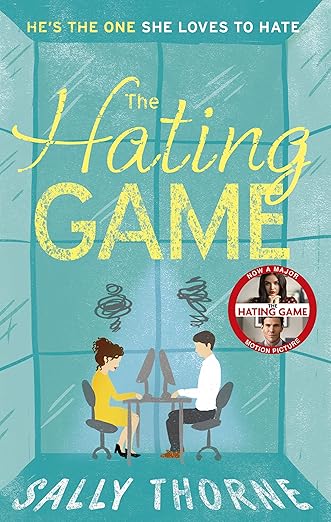
Keep reading
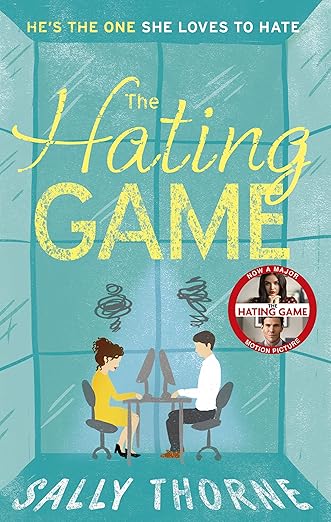
The Hating Game · p.115 of 365

Been 12 days? Catch up in a minute
Your library
See all
ENDS IN 2 DAYS
The Lost
Bookshop
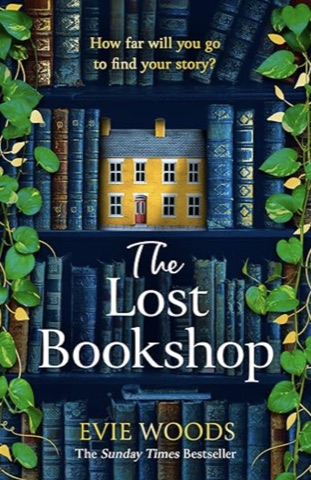
Keep it
Rainy day
6 books


Something creepy
3 books
BOOK WIZARD
What’s the mood tonight?
A slow mystery, a cosy café…

Cosy
Creepy
Under 200 pages
Like Ikigai
9:41


Home

Discover

Library

You
Recap


Previously in
The Hating Game

Reading back through chapters 1 to 9…
Skip and resume p.115

Spoiler-free · up to p.115
Previously in
The Hating Game
Quick · 1 min
Detailed · 4 min
Where you stopped
Chapter 9. After the team-building day, Lucy isn’t sure whether Joshua is still her enemy, and the promotion interviews are getting close.
Who matters right now
LH
Lucy Hutton
Narrator. Assistant to co-CEO Helene
JT
Joshua Templeman
Her rival. Assistant to co-CEO Mr Bexley
What just happened
1
A new role is announced. Both apply, and the loser has to leave.
2
Their rivalry tips into a kiss in the lift that neither will mention.
Did this get you back in?


Resume on p.115
9:41
9:41

Chapter 9


The office was quieter than usual, which only made every sound from the other side of the floor feel louder. She straightened the stack of folders for the third time.
You stopped here
There was a list in her notebook titled Things to Do Before the Interview, and every item on it had somehow become about him. She crossed one out, then wrote it again underneath.
Across the room, a chair scraped. She did not look up. She absolutely did not look up.

Recap saved to this book
View
p.115 of 365
3 h 10 min left
Your garden

AUTUMN · WEEK 8 OF 13
16 h
read this season.
4 books in bloom, 2 growing.







The Hating Game · 32%
Morisaki · 8%
Next leaf
4 more minutes
Growth by week
This week 1 h 30 so far
1
2
3
4
5
6
7
8
9
10
11
12
13
In your garden
6 books this autumn
Ikigai
Bloomed 3 Oct · 2 h 50
Before the Coffee Gets Cold
Bloomed 11 Oct · 3 h 30
The Little Coffee Shop of Kabul
Bloomed 17 Oct · 4 h 40
Seven Ghosts
Bloomed 21 Oct · 1 h 50
The Hating Game
Growing · 32% · 2 h 50
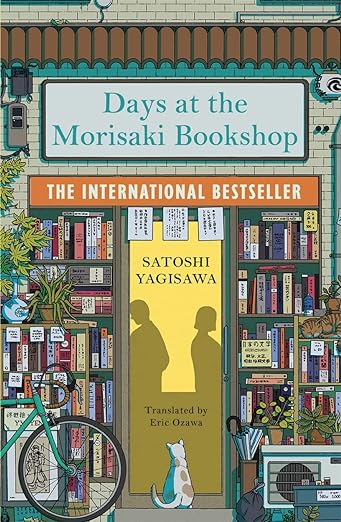
Days at the Morisaki Bookshop
Sprouting · 8% · 20 min
How your garden grows

9:41

Home
Discover
Library

You
9:41
Your seeds
1,240
seeds
Enough to rent 2 books for 30 days. Seeds never expire.
Ways to earn

Read for 30 minutes
Once a day
+100

Review a book you finished
Up to 3 a month
+200

Invite a friend
When they finish 30 minutes
+300
Recent
Read for 30 minutes
Today
+100
Rented The Little Coffee Shop of Kabul
13 Oct
−500
Mina joined from your invite
9 Oct
+300
9:41
Invite a friend
You both get 300 seeds once they’ve read for 30 minutes.
Your code
S1EE8DQ

Copy code
Share invite link
Your invites
M
Mina
Joined and read 30 minutes · you earned 300
R
Ray
Invited 2 days ago · waiting
Remind
9:41
Rent The Lost Bookshop
30 days · ends 24 November
Cost
500 seeds
You have
1,240 seeds
Left after renting
740 seeds
If you buy it later, your place and notes come with you.
Cancel
Rent for 500 seeds

30
DAYS, ALL YOURS

500
seeds
The Lost Bookshop is yours until 24 November.
740 seeds left. We’ll remind you 2 days before it ends.
Start reading
Back to book
9:41


FINISHED

+1
flower
You finished
The Hating Game.
365 pages · 9 h 40 min · 23 highlights
How was it?

Share my finish
Write a review · +200 seeds
9:41

03 · Read together
Answers 03 · Reading feels lonelyReading stays first, friends are a tap away
Every tool says what it does. Notes start private, friends’ comments sit on the exact passage, and anything from a friend further ahead stays hidden until you get there.
- Tools that say what they do
- Select a passage
- A note, private by default
- Friends on this passage
- Notes and highlights
9:41


The Hating Game · Chapter 9

The office was quieter than usual, which only made every sound from the other side of the floor feel louder. She straightened the stack of folders for the third time.
There was a list in her notebook titled Things to Do Before the Interview, and every item on it had somehow become about him.
Across the room, a chair scraped. She did not look up. She absolutely did not look up.
p.115 of 365
3 h 10 min left in book

Contents

Notes · 4

Text

Friends · 2
9:41
The Hating Game · Chapter 9
The office was quieter than usual, which only made every sound from the other side of the floor feel louder. She straightened the stack of folders for the third time.
There was a list in her notebook titled Things to Do Before the Interview, and every item on it had somehow become about him.
Across the room, a chair scraped. She did not look up. She absolutely did not look up.

Highlight

Note

Copy

Share
9:41
The Hating Game · Chapter 9
The office was quieter than usual, which only made every sound from the other side of the floor feel louder. She straightened the stack of folders for the third time.
Add a note
p.115
There was a list in her notebook titled Things to Do Before the Interview, and every item on it had somehow become about him.
Who can see this

Only me

Friends reading this
Cancel
Save note
9:41
The office was quieter than usual, which only made every sound from the other side of the floor feel louder. She straightened the stack of folders for the third time.
Friends on this passage
p.115
There was a list in her notebook titled Things to Do Before the Interview, and every item on it had somehow become about him.
R
Ray
p.115 · 2 days ago
The list! I made one exactly like this before my last interview.

3
Reply
M
Mina
p.115 · 5 h ago
This is where I started rooting for her properly.
1
Reply

1 comment from a friend further ahead is hidden until you reach p.140.
Add to the conversation…

The Hating Game

Contents
Bookmarks
Notes
All · 4
Highlights · 3
Notes · 1
Chapter 9
There was a list in her notebook titled Things to Do Before the Interview, and every item on it had somehow become about him.
Every list I’ve ever made before a big day. This is so real.

p.115 · Only me
Chapter 4
She had perfected the art of looking busy while doing absolutely nothing at all.

p.52 · Shared with friends · 2 reactions
Some rivalries are just friendships with worse manners.
p.48 · Only me
9:41
04 · Find it, keep it, make it yours
One voice across the rest of the app
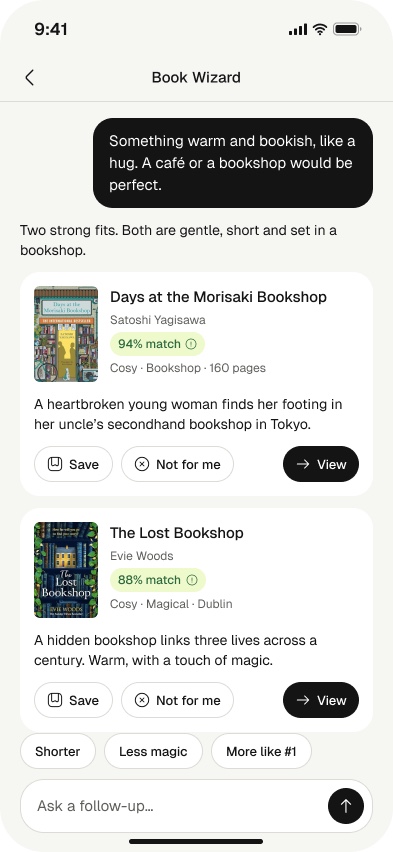
Book Wizard explains every match and lets you steer it. Shelves ask who can see them while you make them, and deleting one can be undone. Notifications stay calm: at most one a day, each with one clear action.
Discover

Title, author or ISBN

Book Wizard
What are you in the mood for?
A cosy mystery, a slow-burn romance…

Something cosy
Like The Hating Game
Under 250 pages
Browse by mood
Cosy
Romantic
Gripping
Light
Thoughtful
Cosy picks this week
See all
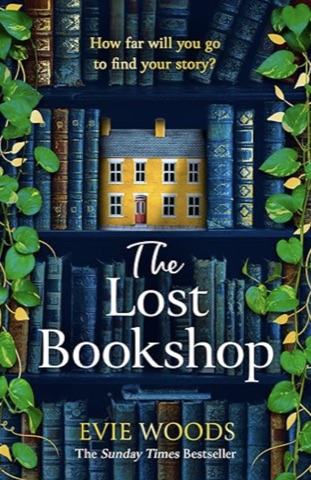
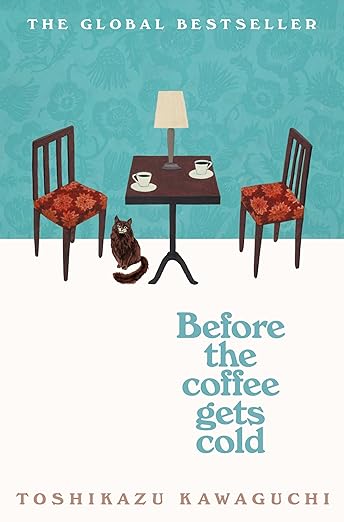


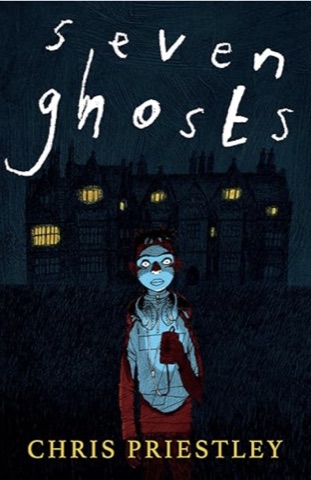
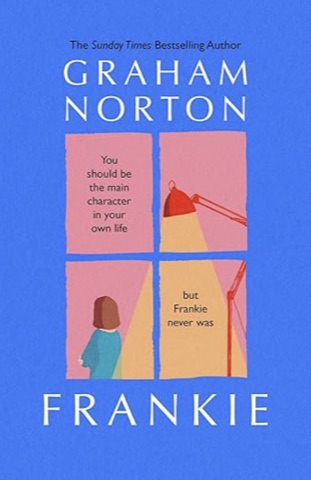
New this week
See all
The Wall
Marlen Haushofer · 240 pages
The Girl Who Drank the Moon
Kelly Barnhill · 386 pages
Small Things Like These
Claire Keegan · 128 pages
9:41


Home

Discover

Library

You
9:41

Book Wizard
WHAT ARE YOU IN THE MOOD FOR?
Describe a feeling, a plot or a book you loved. Book Wizard reads 40,000 books so you don’t have to.
q
w
e
r
t
y
u
i
o
p
a
s
d
f
g
h
j
k
l
⇧
z
x
c
v
b
n
m
⌫
123
space
return

9:41
Book Wizard
Something warm and bookish, like a hug. A café or a bookshop would be perfect.
Book Wizard
Looking through 40,000 books…

Stop
Ask a follow-up…
Something warm and bookish, like a hug. A café or a bookshop would be perfect.
q
w
e
r
t
y
u
i
o
p
a
s
d
f
g
h
j
k
l
⇧
z
x
c
v
b
n
m
⌫
123
space
return
9:41
Book Wizard
Something warm and bookish, like a hug. A café or a bookshop would be perfect.
Two strong fits. Both are gentle, short and set in a bookshop.
Days at the Morisaki Bookshop
Satoshi Yagisawa
94% match

Cosy · Bookshop · 160 pages
A heartbroken young woman finds her footing in her uncle’s secondhand bookshop in Tokyo.

Save


Not for me

View
The Lost Bookshop
Evie Woods
88% match
Cosy · Magical · Dublin
A hidden bookshop links three lives across a century. Warm, with a touch of magic.
Save
Not for me
View
Shorter
Less magic
More like #1
Ask a follow-up…
9:41
Book Wizard
Something warm and bookish, like a hug. A café or a bookshop would be perfect.
Two strong fits. Both are gentle, short and set in a bookshop.
Days at the Morisaki Bookshop
Satoshi Yagisawa
94% match
Cosy · Bookshop · 160 pages
A heartbroken young woman finds her footing in her uncle’s secondhand bookshop in Tokyo.
Save
Not for me
View
The Lost Bookshop
Evie Woods
88% match
Cosy · Magical · Dublin
A hidden bookshop links three lives across a century. Warm, with a touch of magic.
Save
Not for me
View
Shorter
Less magic
More like #1
Ask a follow-up…
Why it’s a 94% match
Days at the Morisaki Bookshop
Mood: warm, gentle
Strong
Setting: bookshop or café
Strong
Length: short read
Good
Like books you saved
Good
Based on your request, the genres you picked and 3 books you’ve saved. Nothing is shared with other readers.
Not quite right
View book


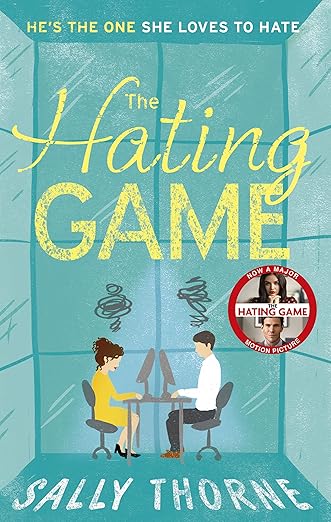
The Hating Game
Sally Thorne
92% match for you

4.5 · 72k ratings · 365 pages
Lucy and Joshua are rival assistants at a newly merged publisher. When a promotion opens up, their daily game of one-upmanship gets serious, and complicated.
Readers say
Summarised from 72k reviews
Funny, fast and swoony. Most love the banter; a few found the ending rushed.
Readers also liked

Renting uses 500 of your 1,240 seeds for 30 days
Rent · 500 seeds
Buy · £2.99
9:41
Library

All
Reading
Finished
Saved
Rented

3 of 10 books in 2026
Edit
On track. One more by the end of November keeps you there.
Reading now
The Hating Game
p.115 of 365 · 3 h 10 min left
Days at the Morisaki Bookshop
p.12 of 160 · 2 h left
Shelves

New shelf
Books for a rainy day

6 books · Friends

Something creepy

3 books · Private
9:41

Home

Discover

Library
You
9:41
Library
New shelf
Name

9 characters left
Who can see it

Only me
Nobody else can find it

Friends
People you follow back

Anyone
Shows on your public profile
Create shelf

Books for a rainy day
6 books · Friends can see this

Share

Recently added

Add books
Ikigai
Before the Coffee Gets Cold
The Little Coffee Shop of Kabul
Days at the Morisaki Bookshop
The Lost Bookshop
The Hating Game
9:41
9:41
Books for a rainy day

Delete “Books for a rainy day”?
The 6 books stay in your library. Only the shelf goes, and friends will no longer see it.
Delete shelf
Keep shelf
9:41
Library
All
Reading
Finished
Saved
Rented
Reading now
The Hating Game
p.115 of 365 · 3 h 10 min left
Days at the Morisaki Bookshop
p.12 of 160 · 2 h left
Shelves
Something creepy
3 books · Private
Shelf deleted. Its 6 books are still in your library.
Undo

Home
Discover
Library
You

TA
Tanya Amiri
20 following · 5 followers
Edit

Your garden
16 h read · 4 in bloom · 2 growing


1,240 seeds
Enough for 2 rentals
What others can see
Books for a rainy day
Shelf · 6 books · friends
Reading now
Visible to friends only
9:41

Home
Discover
Library

You
9:41
People
Following · 20
Followers · 5

Search people
R
Ray
Reading The Hating Game · p.140
Following
M
Mina
Reading Days at the Morisaki Bookshop
Following
J
Joshua K.
Finished 2 books this month
Following
S
Sara
Follows you · 3 friends in common
Follow back
Notifications
Mark all read
Today
R
Ray commented on a passage you’ve read in The Hating Game.
p.115 · 2 h ago

Your rental of The Lost Bookshop ends in 2 days.
Keep it for £2.99 or rent again with seeds
Earlier
S
Sara started following you.
3 friends in common · 2 d ago
Follow back

Your garden grew a new leaf.
From 30 minutes of reading · 3 d ago

New from Haruki Murakami, an author you follow.
5 d ago
9:41
Five readers, eight tasks: 32 of 40 felt good.
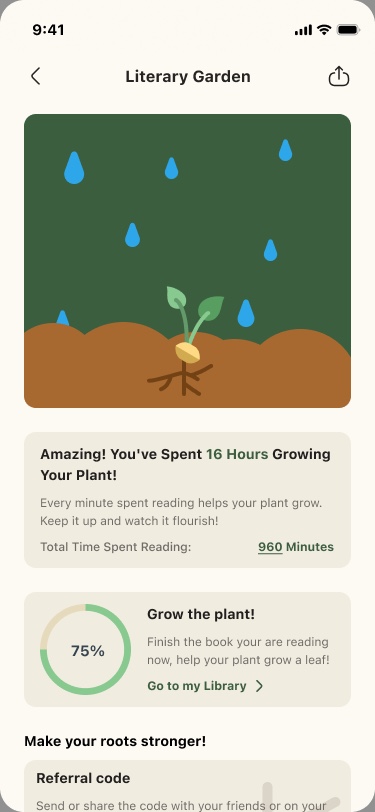
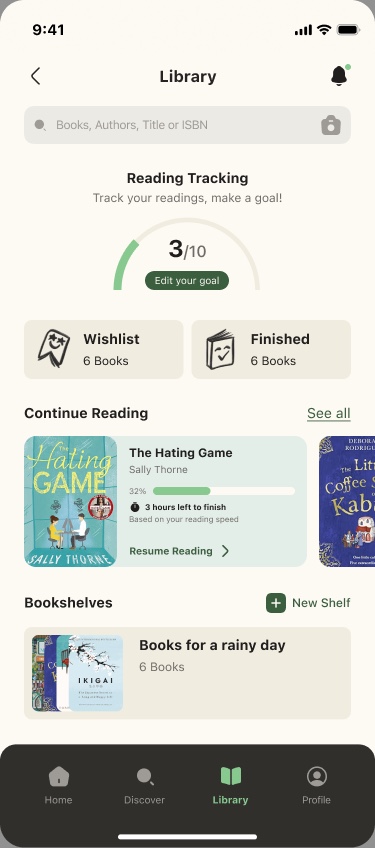
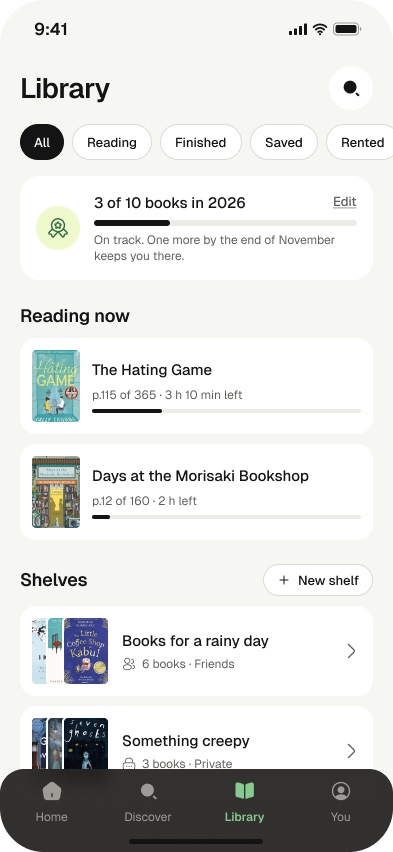
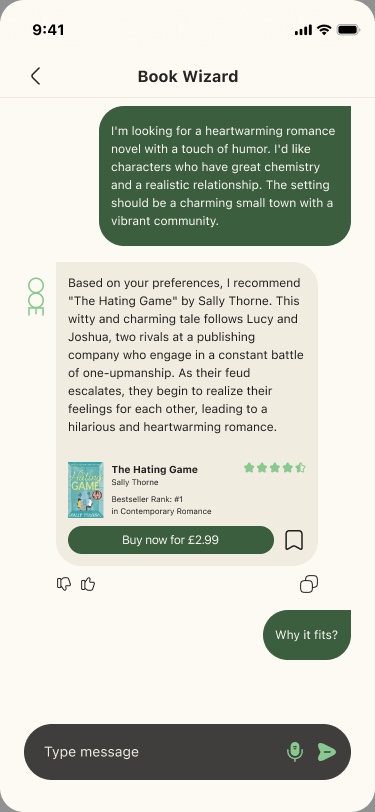
I tested the hi-fi prototype with five target readers. After each task, they marked how it felt: green or red. Most of Doone felt good. Where it didn’t, I redesigned it: the garden, the library and Book Wizard all changed because of what readers said.
| Reader | 1 | 2 | 3 | 4 | 5 | 6 | 7 | 8 |
|---|---|---|---|---|---|---|---|---|
| Reader 1 | Task 1: felt good | Task 2: felt good | Task 3: felt good | Task 4: felt good | Task 5: felt good | Task 6: felt good | Task 7: felt good | Task 8: felt good |
| Reader 2 | Task 1: felt good | Task 2: felt good | Task 3: felt bad | Task 4: felt good | Task 5: felt good | Task 6: felt good | Task 7: felt good | Task 8: felt good |
| Reader 3 | Task 1: felt good | Task 2: felt good | Task 3: mixed | Task 4: felt good | Task 5: felt good | Task 6: felt bad | Task 7: felt bad | Task 8: felt good |
| Reader 4 | Task 1: felt good | Task 2: felt good | Task 3: mixed | Task 4: felt good | Task 5: mixed | Task 6: felt good | Task 7: felt good | Task 8: felt good |
| Reader 5 | Task 1: felt good | Task 2: mixed | Task 3: felt bad | Task 4: felt good | Task 5: felt good | Task 6: felt good | Task 7: felt good | Task 8: felt good |
- 32 felt good
- 4 mixed
- 4 felt bad
What I saw, what I changed
Drag to see each change
What I’d measure next, and what I’d do differently
If Doone shipped, I’d judge it on three numbers: how many started books get finished, how many readers return after a week away, and how many keep a seven-day streak. I’d test the recap first: it’s the cheapest way to win back a reader who has already left.
- 01
Finish rate
Started books that get finished
- 02
Coming back
Readers who return after a week away
- 03
Seven-day streaks
Readers who read seven days in a row
What I’d do differently
I’d run a diary study over several weeks, because a one-hour session can’t show how motivation fades. And I’d design streaks that forgive a missed day, so the tree never becomes a source of guilt.
- Mon
- Tue
- Wed
- Rest
- Fri
- Sat
- Sun
Missed Thursday? Your garden waits.