Case study · /04
Musō
Restoring the creative flow of designers with an AI-powered inspiration tool
- Role
- UI/UX designer, researcher
- Timeline
- 3 months, Mar–May 2024
- Team
- Solo, university project
- Focus
- UX research, UI design, Interaction design
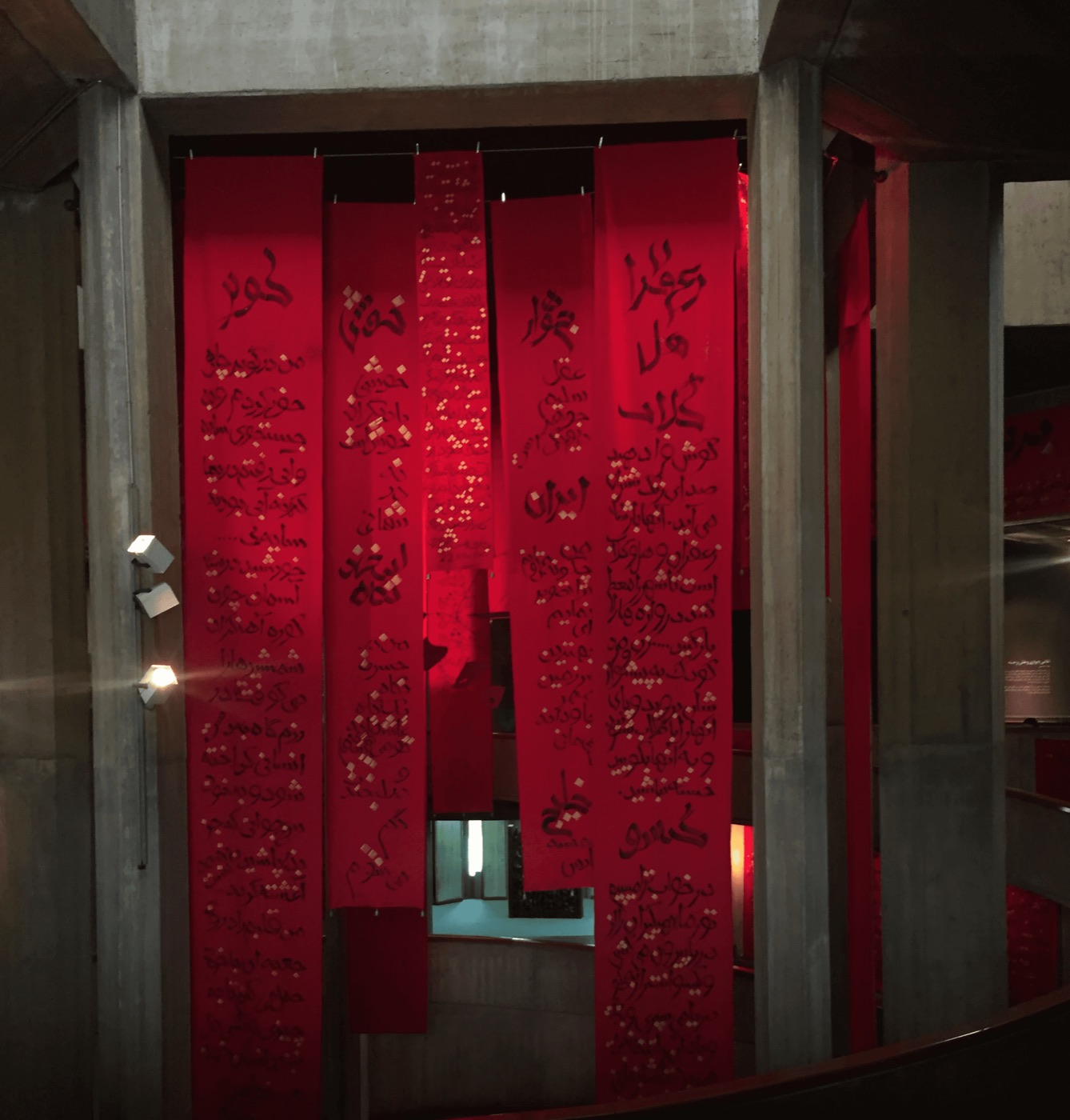
When Sadeghi couldn’t paint, he wrote poetry.
In my first year at university, I saw Ali Akbar Sadeghi’s work at the Tehran Museum of Contemporary Art. What stayed with me was his story. When depression stopped him painting, he didn’t force it. He turned to poetry and sculpture, and found his voice again. He didn’t break through the wall; he walked around it.
Musō is built on that idea. When a designer is stuck, it doesn’t push them to try harder. It suggests one small reset, picked by AI for how they feel right now.
It wasn’t a lack of ideas. It was fear, and being alone with it.
I started by reading: art therapy, mental health at work, and what causes creative block. Anxiety kept coming up. In the UK, 39% of professionals reported mental health issues within a year (BBC, 2020).
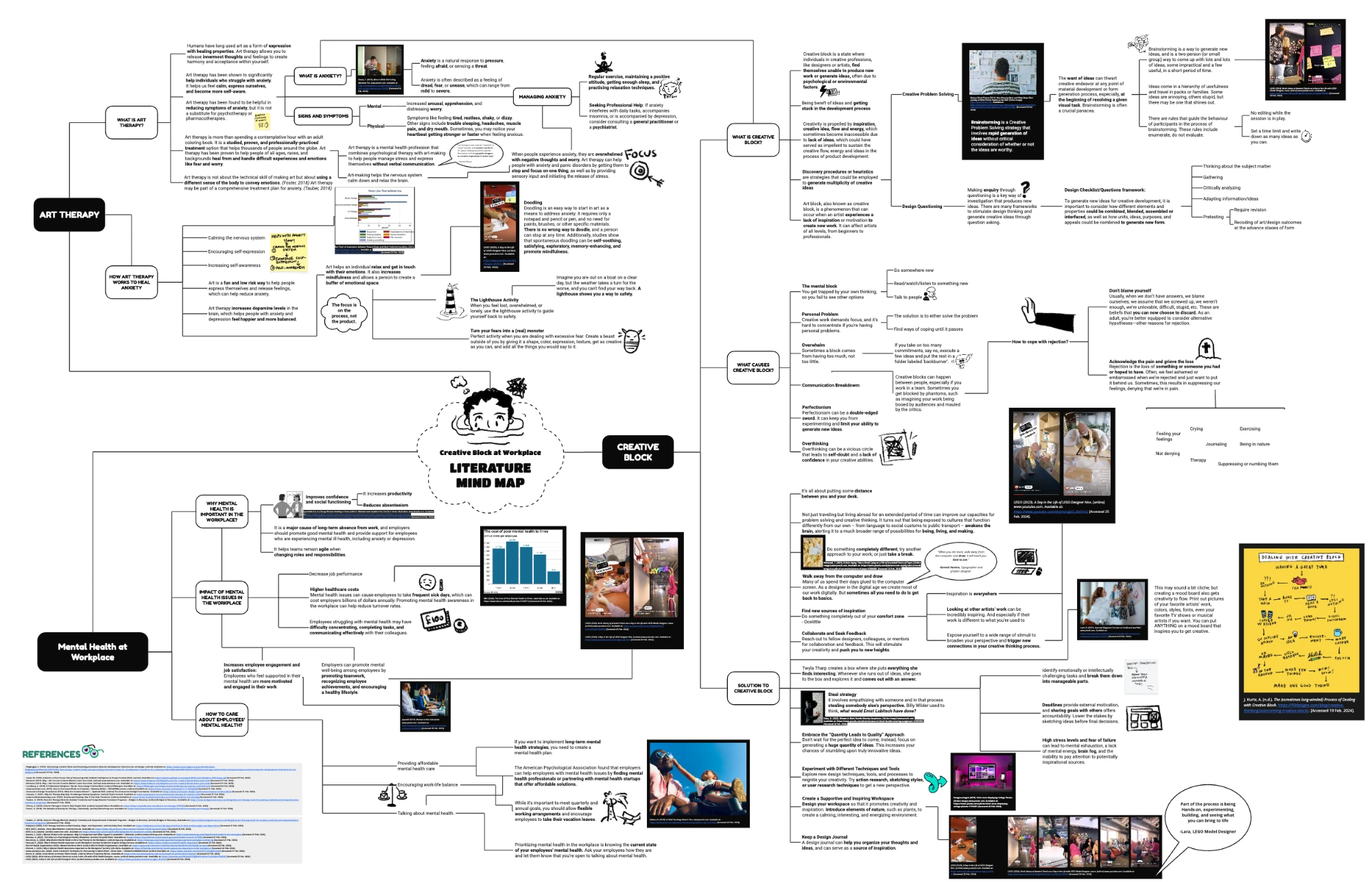
Select a pin to zoom into what causes creative block.
01 Perfectionism and overthinking
- Perfectionism can be a double-edged sword. It can keep you from experimenting and limit your ability to generate new ideas.
- Overthinking can be a vicious circle that leads to self-doubt and a lack of confidence in your creative abilities.
From my literature mind map
02 Blocked by phantoms
- Creative blocks can happen between people, especially if you work in a team. Sometimes you get blocked by phantoms, such as imagining your work being booed by audiences and mauled by the critics.
From my literature mind map
03 Trapped in your own thinking
- You get trapped by your own thinking, so you fail to see other options.
- The ways out: go somewhere new; read, watch or listen to something new; talk to people.
From my literature mind map
Then I sorted what people told me.
After a screener survey, I interviewed creative professionals and put every quote, observation and pain point on one affinity board, grouped into themes. Two patterns ran through all of them: a fear that rough work wouldn’t measure up, and facing it alone, inside your own discipline.
So Musō couldn’t just be a source of inspiration. It had to be an antidote to creative loneliness.
Fear of imperfection
“Creative block prevents me from being able to start.”
- Effects → Before → Source
- Effects → During → Mental
Quote and codes from the affinity board
Being alone with it
“First thing I do after getting creative block is talking to my friends.”
- Effects → After → Non-physical action
- In-app features → Sharing with others
- Users → Activities → Team
Quote and codes from the affinity board
From “I’m stuck” to doing something in two taps.
Tap one is “I’m blocked”. Tap two, after a check-in you can skip, is “Show me ideas”. From there Musō hands you one small reset to do, not an article to read.
One way out
“I’m blocked” is the only primary button on Today. Everything else is a card, so a blocked mind has one obvious thing to press.
Ask, but let them skip
Mood and what’s in the way are optional. The mood picked here becomes the “before” for later.
Explain the pick
The AI ranks three resets and says why it recommends one: “because you’re feeling stuck and short on ideas”. A reason makes the suggestion feel chosen, not random.
Do it here, then measure
The reset happens in the app, with a timer and the camera. At the end the same mood question returns, so the change is shown, not assumed.
Being stuck is easier with someone to be stuck with.
“First thing I do after getting creative block is talking to my friends,” one person told me. So in Musō, sharing a reset or starting a team takes a few taps.
Share without leaving
Share opens a sheet over the activity, with your recent teams first. Pick one and the button says exactly what will happen: “Share with 1 team”.
Confirm in place
The shared card lands in the team’s thread and a short toast confirms it. No modal to dismiss, and the conversation carries on.
Start with a name
New team sits under Community, next to the live challenge. The name field is ready to type the moment it opens.
Invite who you work with
Add people already on Musō, or invite those who aren’t yet. Invite turns into Invited in place, so it’s clear who joins later.
Small wins vanish unless something keeps them.
Blocked, it’s easy to forget the days that went well. So every reset lands in a journal: how you felt before and after, and what helped. Profile and settings stay out of the way until you need them.
Every tab keeps its place
Leave the journal mid-scroll and come back: it’s exactly where you left it. Tabs switch instantly, because people tap them many times a day.
Progress you can see
Profile shows the badges you’ve earned and how close you are to your goals. Locked badges stay faded, something to reach for.
Deleting asks first
Delete account names what would be lost, and the safe choice, Keep my account, comes first.
Dark, everywhere
Appearance offers System, Light and Dark rather than a switch, with System as the default. Choose Dark and every tab follows.
People didn’t only want to get unstuck. They wanted to tell someone how it went.
In the testing and interview sessions, the same thing kept coming up. Creative people like to share how it’s going, and to write about their block, the way they would on Medium or Instagram.
- Sharing
Telling others how the work is going
- Writing
Writing about creative block, the way people do on Medium
- Posting
Showing progress, the way people do on Instagram
- Passing it on
Sharing their own experience of being stuck with others
It was the clearest signal of what to build next.